

Bruce Lee and Jeet Kune Do: The Origins of Modern Combat Training
- SiFu Adrian Tandez
- Mar 5
- 4 min read

Before Bruce Lee, Martial Arts Training Was Mostly Traditional
In the 1950s and early 1960s, martial arts schools looked very different from modern combat gyms.
Training typically focused on:
Forms and choreographed techniques
Compliant partner drills
Limited or no contact sparring
Traditional etiquette and ritual
Minimal athletic conditioning
In many schools, full-contact sparring was discouraged. Instructors often feared injuries or believed realistic testing would undermine tradition.
This meant many practitioners spent years training techniques that were rarely tested under pressure.
Bruce Lee saw the problem clearly.
Bruce Lee Questioned Everything
From an early stage in his teaching career, Bruce Lee believed martial arts must be functional, not ceremonial.
After arriving in the United States and opening his first school in Seattle in 1959, Lee began teaching with a mindset that was radically different from most traditional schools.
This philosophy eventually evolved into Jeet Kune Do.
Rather than preserving fixed systems, Lee constantly asked:
Does this work against resistance?
If a technique could not function under pressure, Lee believed it had limited value.

Equipment Training Before It Became Standard
One of Bruce Lee’s major innovations was incorporating modern training equipment.
At the time, many traditional martial arts schools trained almost entirely through forms and partner drills.
Lee introduced tools that improved measurable performance:
Heavy bags for power development
Focus mitts for timing and accuracy
Kicking shields for full-force impact training
Jump rope for conditioning
Weight training for explosive strength
Lee treated martial arts like athletic performance training, not ritual.
Today these methods are common in combat sports, boxing gyms, and MMA schools.
In the early 1960s, however, this approach was unusual.

Full Contact Sparring: The Laboratory of Combat
Bruce Lee also insisted on live sparring.
Many martial arts schools limited sparring to light contact or choreographed exchanges.
Lee believed that without resistance, students would never develop:
Real timing
Distance management
Emotional control under pressure
Adaptability against a moving opponent
For Lee, sparring was not simply fighting practice.
It was a laboratory for learning.
Through sparring, weaknesses were exposed—and weaknesses could then be corrected.
Lessons From Boxing and Fencing
Bruce Lee was highly analytical about combat.
He studied other fighting disciplines and adopted what worked.
Western boxing influenced his:
Punch mechanics
Head movement
Footwork
Conditioning
Fencing influenced his concept of interception—the idea of stopping an opponent’s attack before it fully develops.
These ideas became central to Jeet Kune Do’s strategy.
Rather than preserving tradition, Lee absorbed what was effective.
This approach was revolutionary at the time.
Today it is normal in modern combat sports.

Seattle, Oakland, and Los Angeles: The Evolution of JKD Training
Bruce Lee’s training philosophy evolved through the schools he operated in the United States.
Seattle (1st Jun Fan Gung Fu Institute with Taky Kimura)
Lee’s first American students in Seattle experienced training that was already unusual for the era.
Classes included:
Heavy bag work
Conditioning drills
Controlled sparring
Lee encouraged students to question techniques and test ideas.
Oakland (2nd Jun Fan Gung Fu Institute with James Yim Lee)
In Oakland, Lee continued refining his ideas alongside martial artist James Yim Lee.
Training became even more experimental.
Students sparred regularly and incorporated:
Boxing gloves
Protective gear
Pad work
Lee also began challenging martial artists from other styles to test his approach.
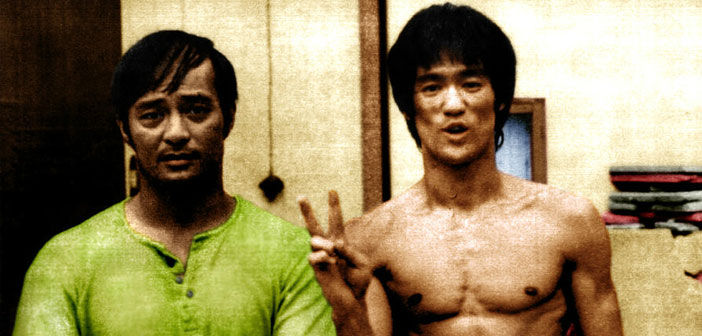
Los Angeles (3rd Jun Fan Gung Fu Institute - Chinatown School - with Dan Inosanto)
By the time Lee opened his Los Angeles school, his philosophy had fully matured.
Training emphasized:
Interception and timing
Athletic conditioning
Realistic sparring
Efficiency over complexity
This environment eventually produced what Lee called Jeet Kune Do, or “the way of the intercepting fist.”

The Philosophy Behind Jeet Kune Do
Jeet Kune Do was not meant to be a rigid system.
Bruce Lee described it as:
“Using no way as way, having no limitation as limitation.”
The goal was not to preserve tradition but to cultivate adaptability.
Practitioners were encouraged to:
Test techniques under pressure
Discard ineffective habits
Absorb useful ideas from other disciplines
Remain flexible in combat
This philosophy influenced the evolution of modern combat training.
Modern Combat Sports Reflect Bruce Lee’s Vision
Today’s combat sports training methods closely resemble the approach Bruce Lee promoted decades ago.
Modern gyms routinely use:
Heavy bags
Pad work
Strength and conditioning programs
Full-contact sparring
Cross-training between disciplines
These ideas were controversial when Lee introduced them.
Today they are standard practice.

Why This History Still Matters
Bruce Lee’s legacy is not just about technique.
It is about methodology.
Serious martial arts training requires:
Pressure testing
Realistic conditioning
Functional equipment
Honest evaluation
Without these elements, training risks becoming theoretical.
Jeet Kune Do helped push martial arts toward realism.

Final Thought
Bruce Lee challenged martial arts culture not out of disrespect, but out of commitment to effectiveness.
Through Jeet Kune Do, he helped transform martial arts training into something closer to athletic science.
What was once radical—equipment training, sparring, cross-discipline learning—is now standard.
The lesson remains simple:
Train honestly. Test your skills. Adapt constantly.
If you're interested in training, contact us:
Adrian Tandez
Warrior Combat Arts Academy
Phone: 408 373 0204
Email: contact@warriorcombat.net


Comments